NoSignal MPEG-TS operator control plane
EN RO
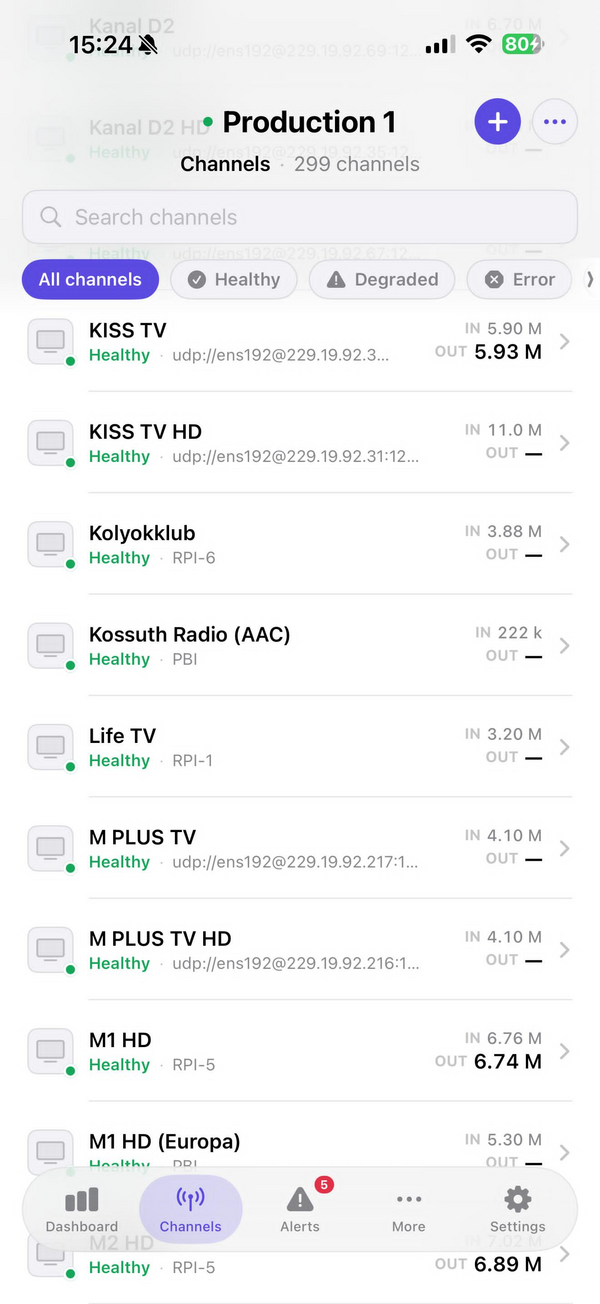
New NoSignal for iOS

Keep your MPEG-TS channels flowing, correctly mapped, and fully observable.

NoSignal is a Linux application for ingesting, switching, conditioning, and delivering MPEG-TS streams. A single binary handles packet parsing, PSI rewriting, CBR pacing, failover, and output delivery. Its built-in HLS origin publishes an IPTV bouquet plus media and master playlists for each enabled channel. Transcoded preview and compatible HLS renditions require FFmpeg; historical telemetry charts require Prometheus.

NoSignal channels console with channel list, status pills, and delivery targets.
Channel Console Channels, state, mode, and destinations.
What It Does

Ingest, switch, remap, and deliver transport streams with full operator visibility.

Ingest

UDP multicast, HTTP TS, SRT (caller/listener, AES, TSBPD), and HLS pull — with multi-source failover per channel.

Delivery

UDP multicast, HTTP TS push and pull, SRT, and an opt-in HLS origin — multiple delivery paths per channel.

HLS Origin

A built-in HLS origin with one IPTV bouquet for all enabled channels, per-channel media and master playlists, six-second PCR-aligned segments, a rolling five-minute DVR window, a browsable channel index, and live enable/disable controls.

Browser & iOS transcode

Optional H.264/AAC renditions make MPEG-2, MP2, and HEVC-in-TS channels playable in browsers and the iOS app. Transcode audio, video, or both, with deinterlacing, optional DVB subtitle burn-in, and automatic or operator-defined video and audio bitrates.

Failover & anti-flap

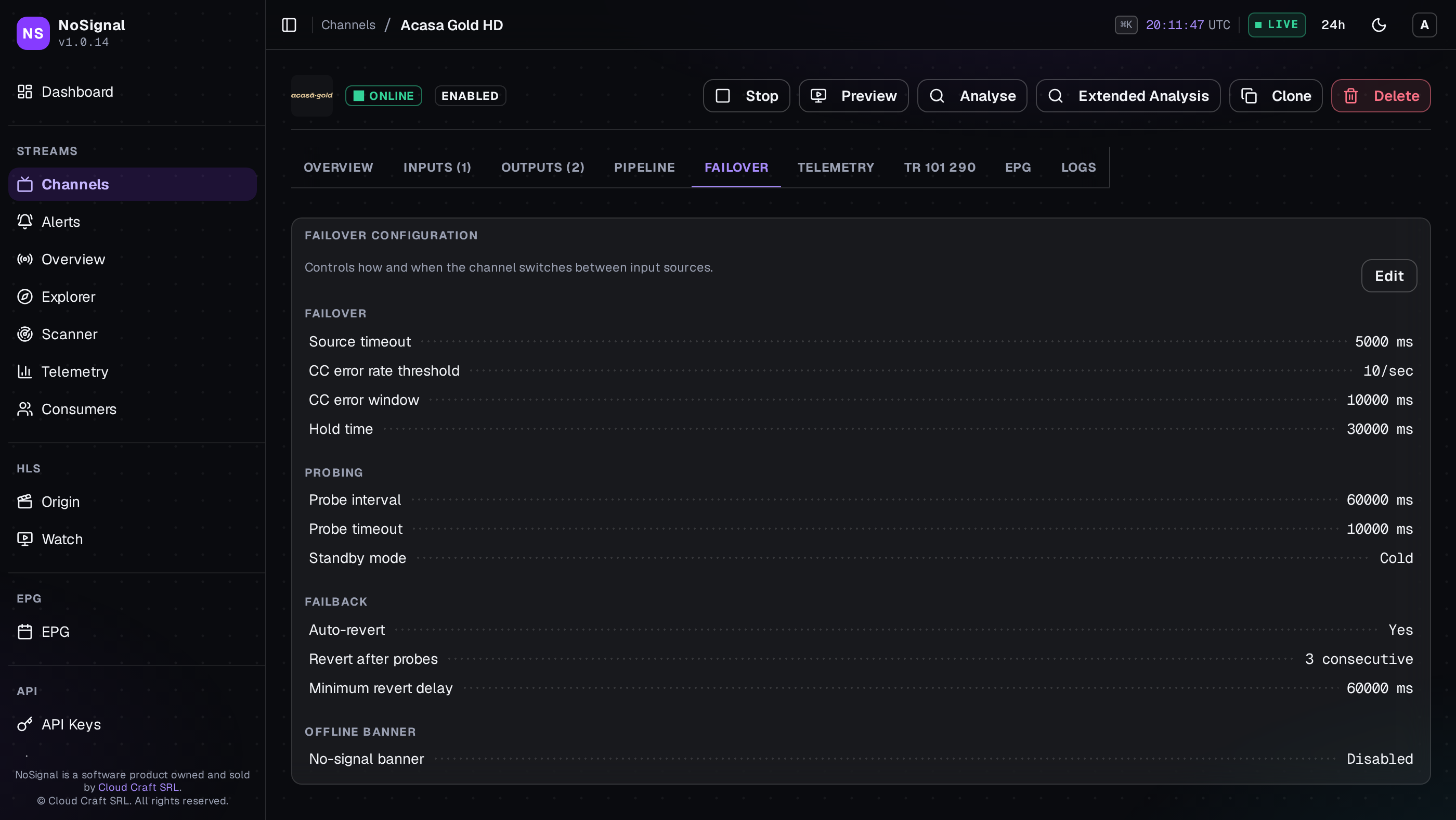
Priority-based switching with input lockout and escalating hold times.

CBR pacing

P-controller with fractional accumulator, null stuffing, and PCR restamping.

Smart slot resolution

Remux by language, codec, or PID, with required or optional slots and exact matching in strict mode.

Stream analysis

Transport vs PCR bitrate, per-PID breakdown, integrated ffprobe, and an ETSI TR 101 290 P1/P2/P3 scorecard.

Change detection

PAT, PMT, and SDT changes are logged as soon as the upstream stream changes.

Live availability

Online, Degraded, and Offline remain the primary operator states. Input, output, interface, video, scrambling, and TR 101 290 findings stay visible as separate diagnostics.

Interface-aware I/O

Bind multicast paths to an exact NIC, monitor link state live, suspend delivery while links are down, and auto-disable configuration when an interface is removed.

Alerts & public status

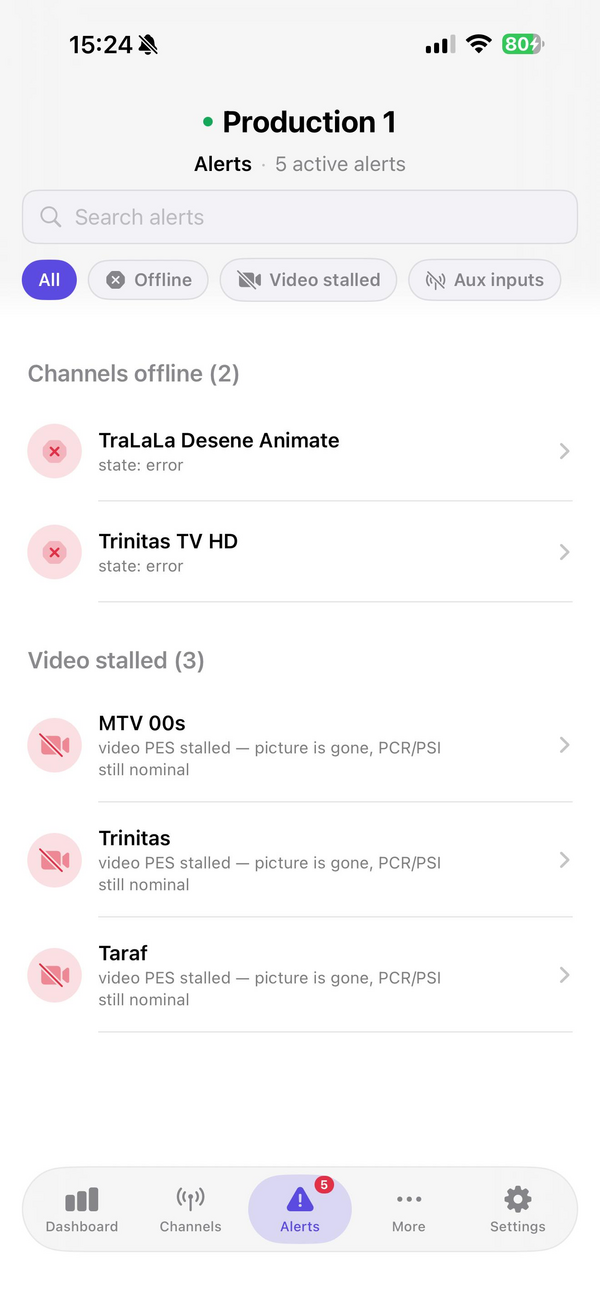
Operator alerts cover availability, warm inputs, output delivery, video, scrambling, and TR 101 290. An optional public page exposes only channels you mark public.

External API

REST integration with read-only or read-write API keys, optional IP allowlists, role-based operator access, config backup, and Prometheus metrics.

Telemetry

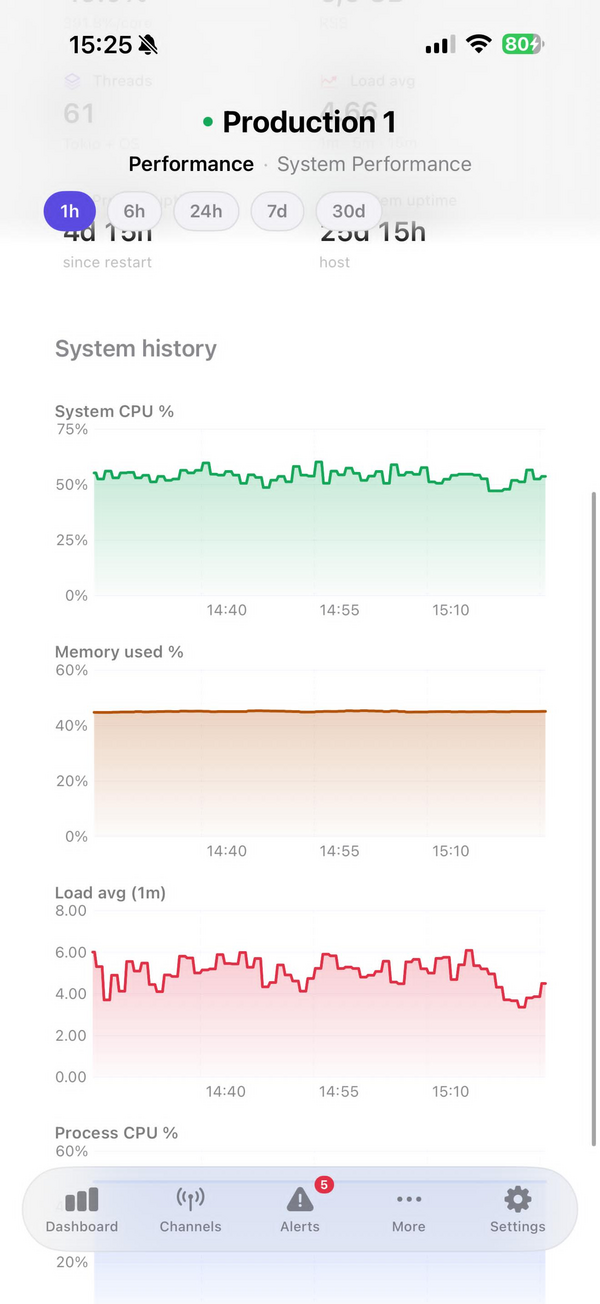
Per-channel bitrate, PCR jitter, and CC error counters exposed on a metrics endpoint. Requires Prometheus to scrape and back the historical charts.

Live preview

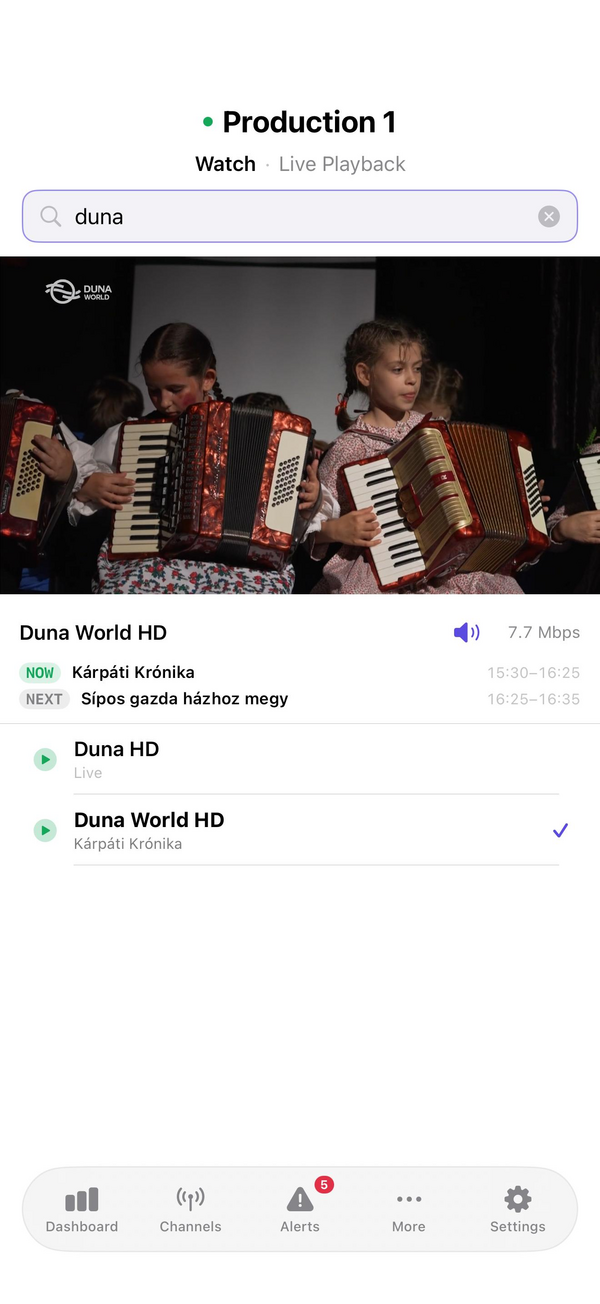
Browser playback or raw TS passthrough. Requires FFmpeg on the host for the transcoded preview path.

Live reconfiguration

Change inputs, outputs, and failover while the channel runs.

EPG

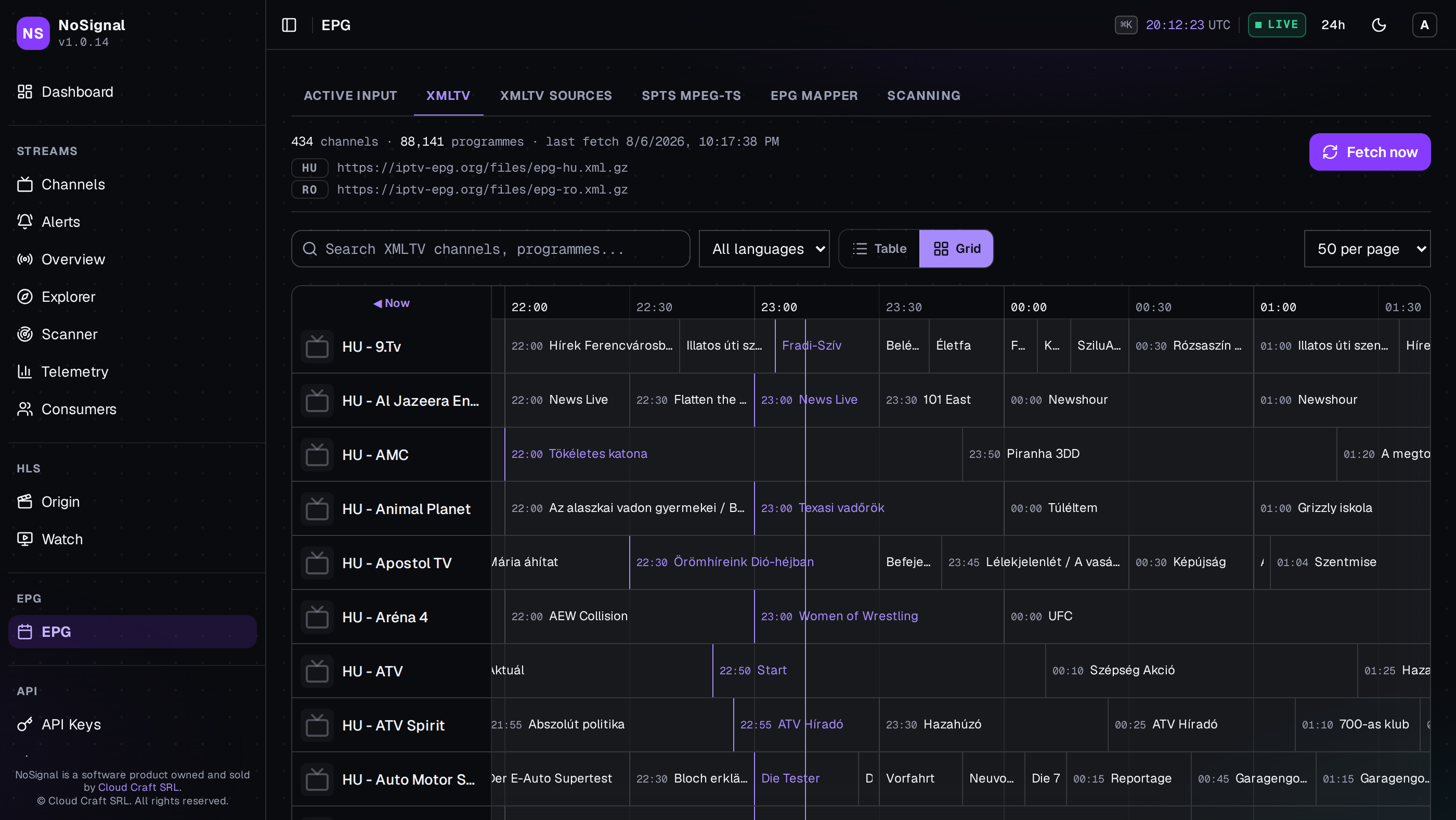
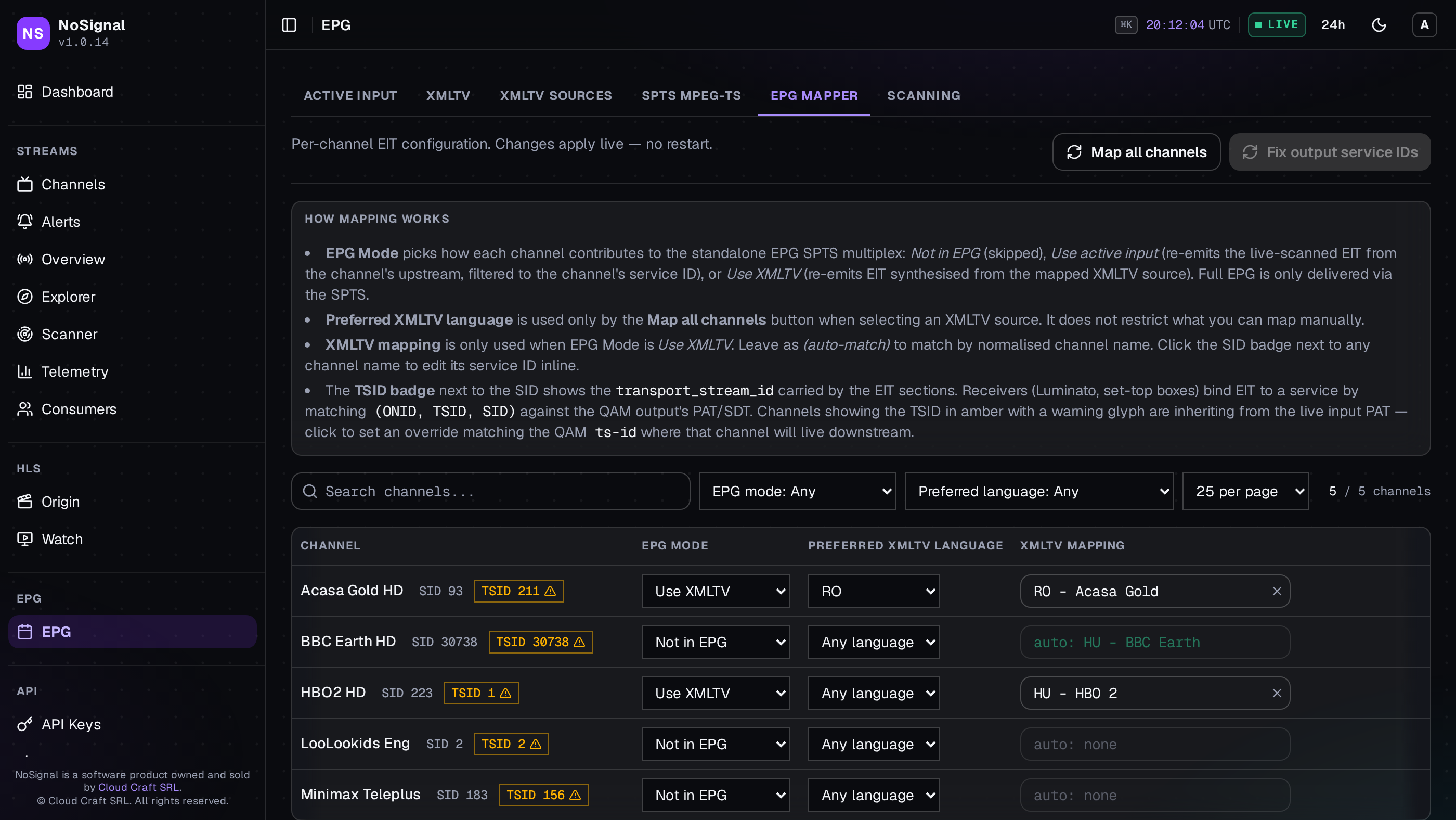
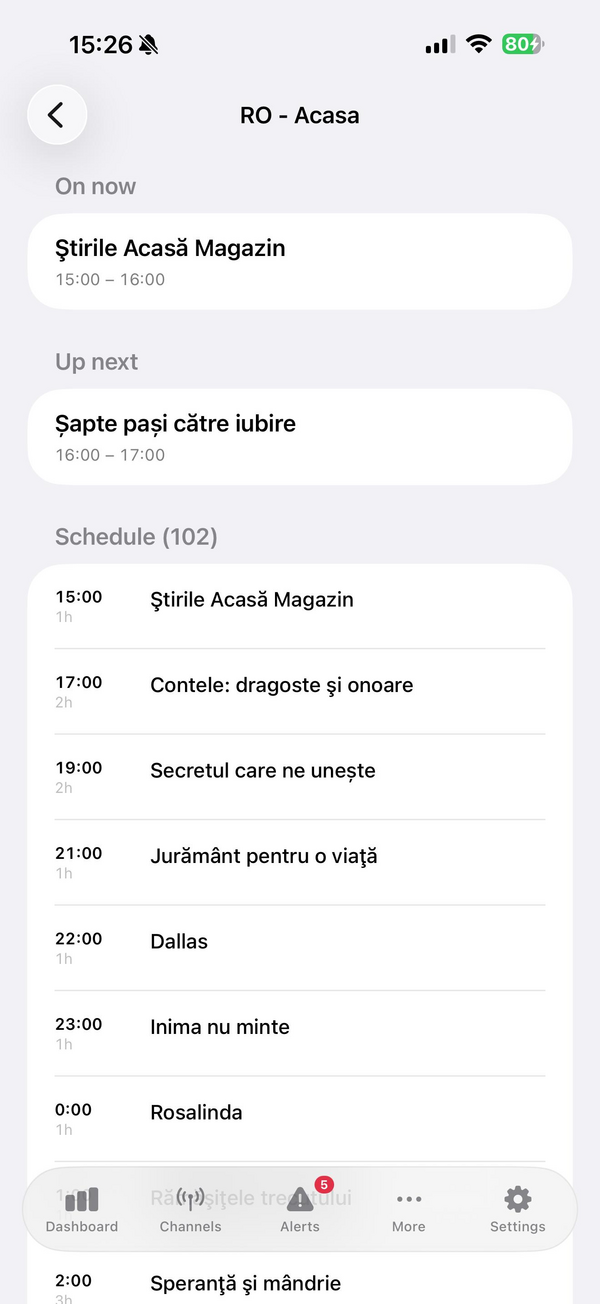
XMLTV ingestion, EIT scanning, auto-mapping, and dedicated SPTS multiplex delivery.

On-demand activation

Defer eligible no-output, HTTP TS, or SRT-listener channels until a consumer connects. Push outputs and enabled HLS origins remain always on.
Operator Workflows

Channel inventory, live preview, scanning, and administration — all from one console.

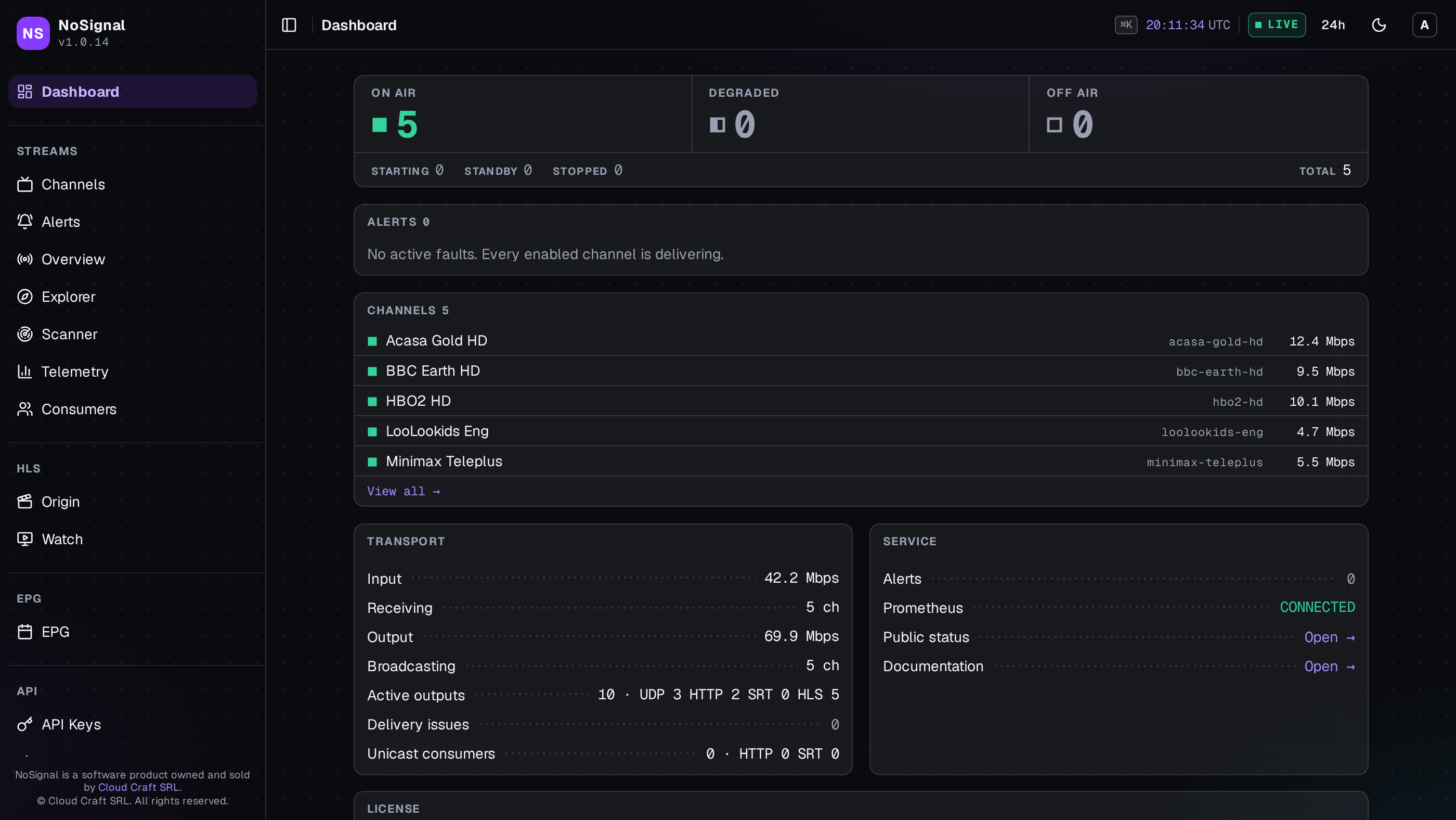
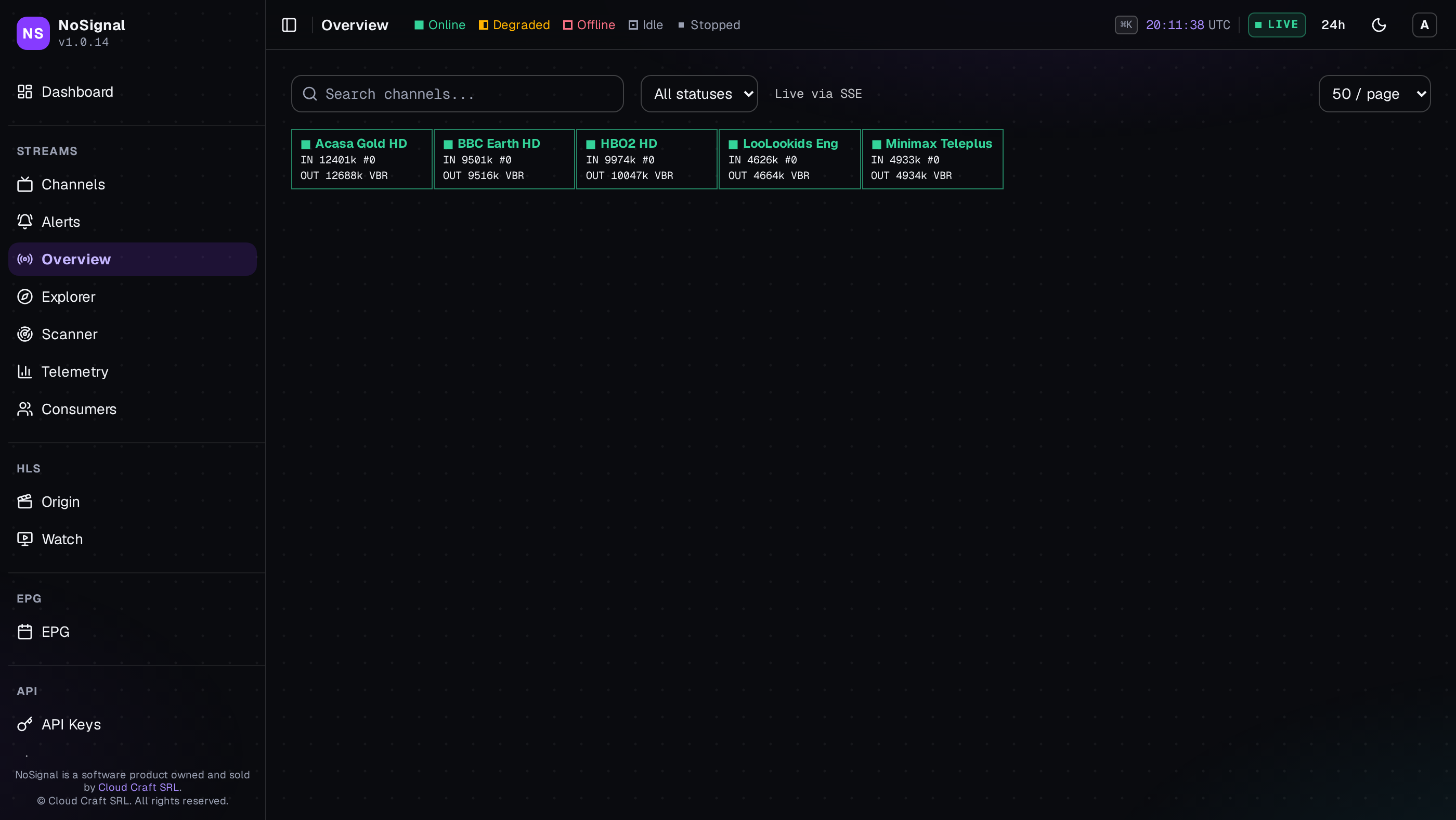
NoSignal overview grid showing channel health cards with bitrate and state.
Overview Health triage across all channels at once.
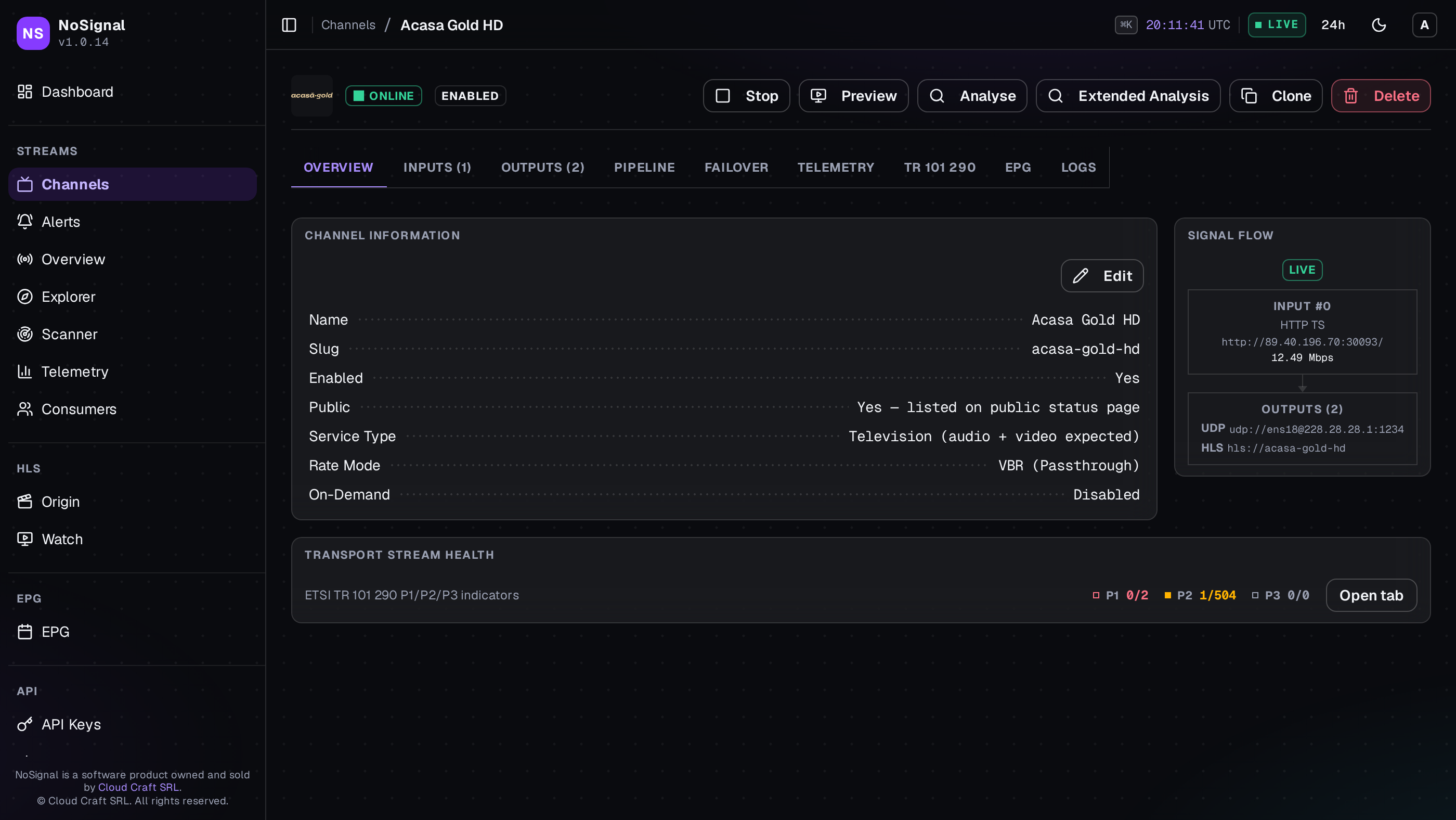
NoSignal channel detail page with signal flow, actions, and output paths.
Channel Detail Signal path, actions, and active outputs.
Monitoring

Live channel state and Prometheus-backed telemetry in one view.

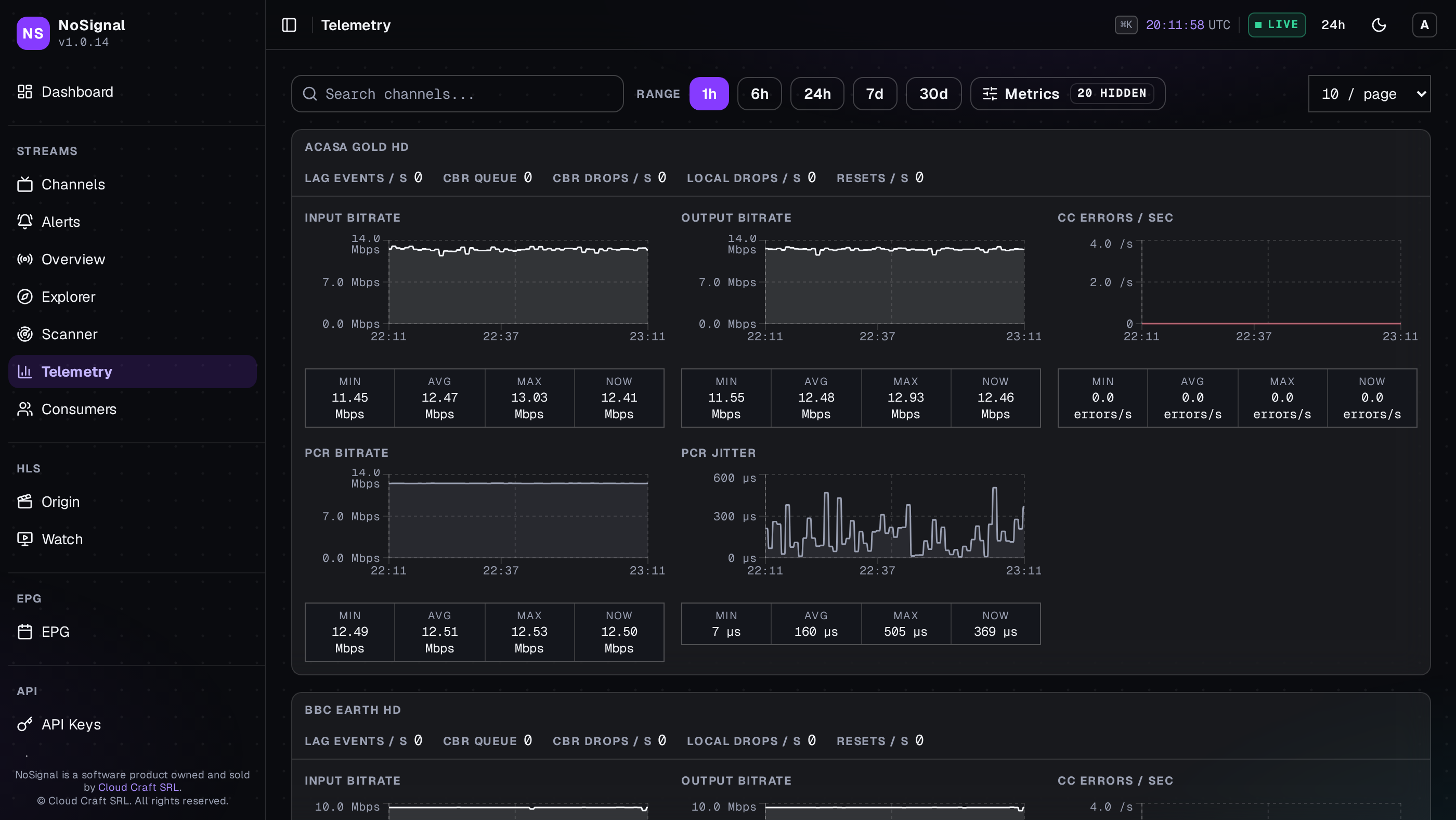
NoSignal telemetry dashboard with input/output bitrate, CC errors, PCR bitrate, and PCR jitter charts.
Telemetry Input/output bitrate, CC errors, PCR bitrate, and PCR jitter.
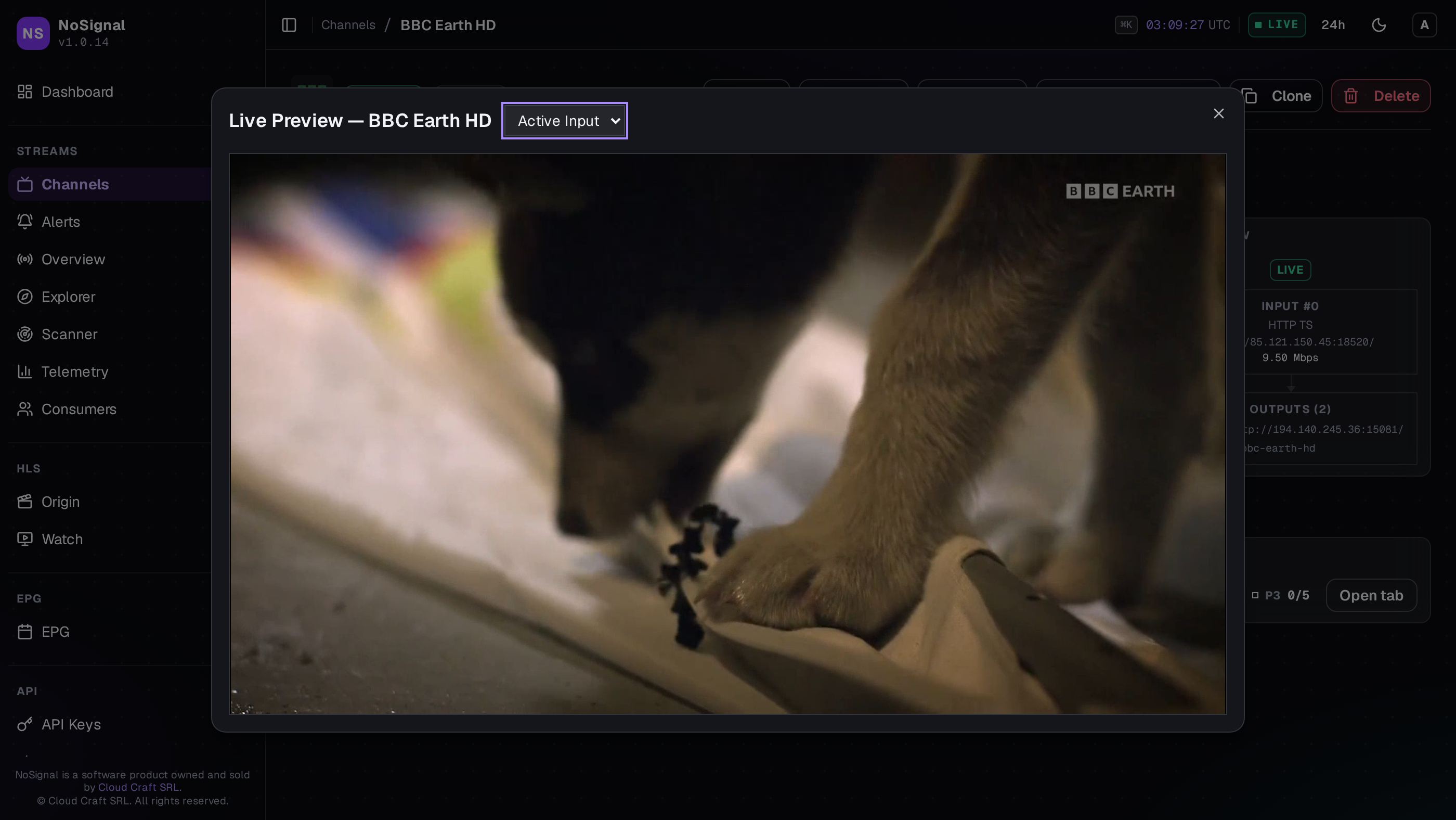
NoSignal live preview modal showing source selection and browser playback.
Live Preview Browser playback of the active input or channel output.
Conditioning and Failover

PSI rewrite, stream-slot mapping, and failover thresholds — all operator-configurable.

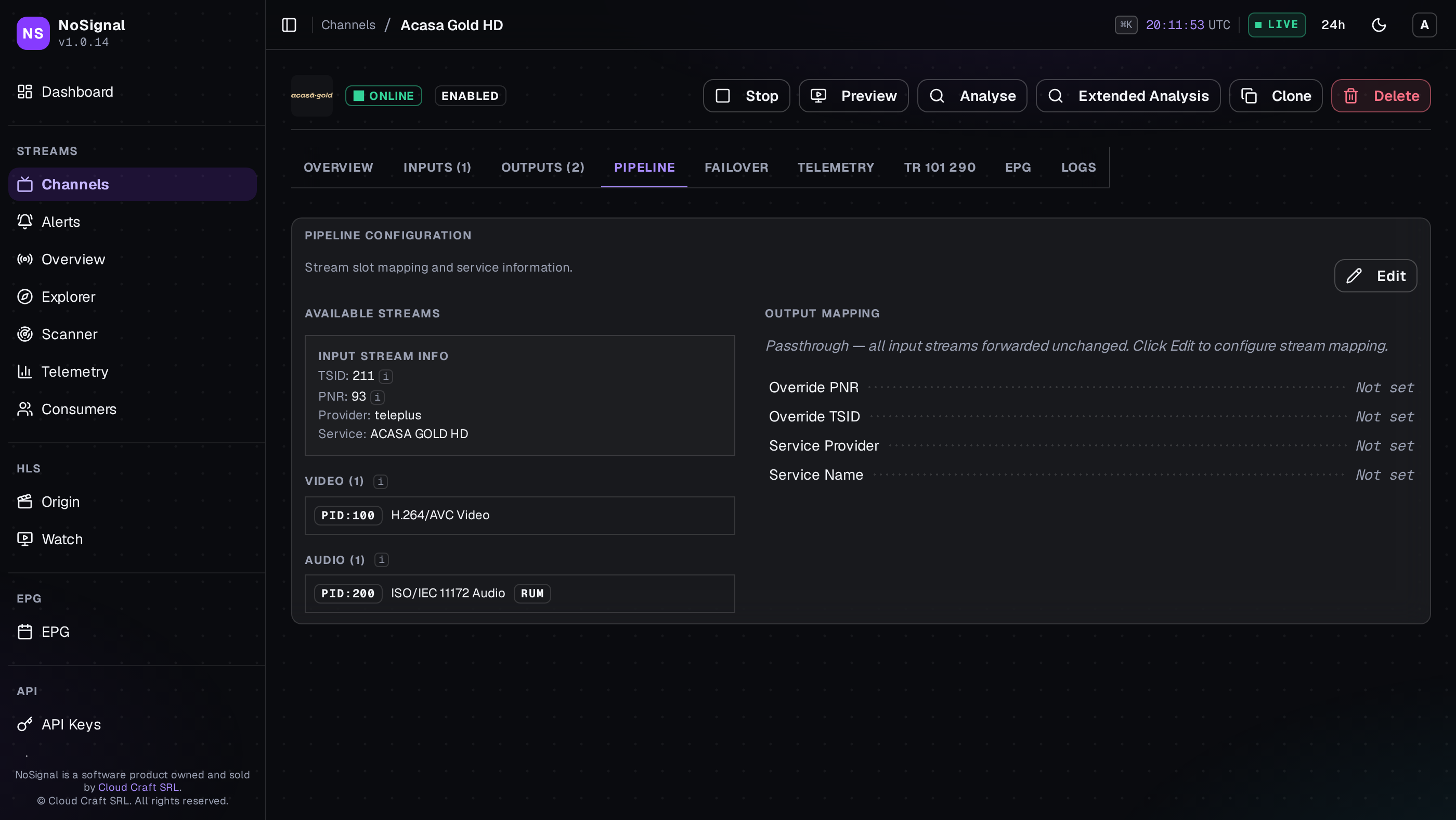
NoSignal pipeline configuration with input stream info, output mapping, slot resolution, and service metadata.
Pipeline Input streams, output mapping, slot resolution, and service metadata.
NoSignal failover configuration with timeout, probes, revert, and anti-flap settings.
Failover Timeout, CC threshold, probe interval, revert policy, and offline banner.
Electronic Program Guide

XMLTV ingestion, live EIT scanning, channel mapping, and SPTS multiplex delivery.

NoSignal XMLTV browser with timeline grid, colour-coded programmes, locale filter, and text search.
XMLTV Browser Timeline grid, locale filtering, and programme search.
NoSignal EPG Mapper with per-channel EPG mode, XMLTV mapping, and service ID management.
EPG Mapper Per-channel EPG mode, XMLTV mapping, and service ID management.
Now on iOS

Your control room, in your pocket.

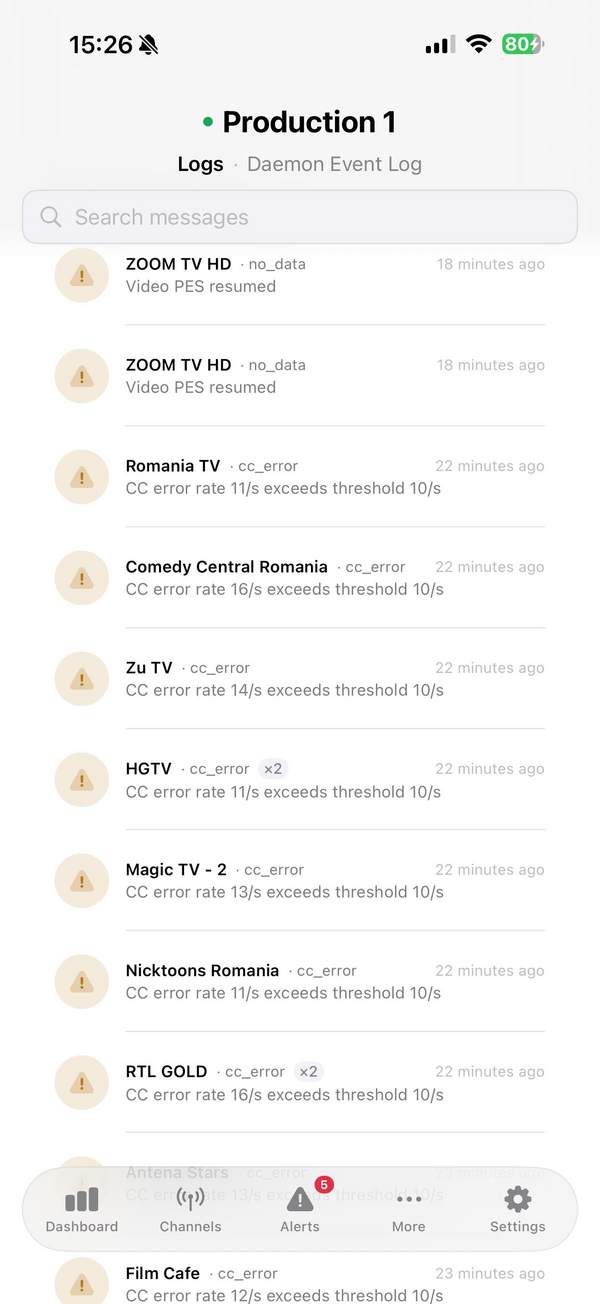
The NoSignal console is also available as a native iPhone and iPad app. Connect it to the daemon on your server to monitor channels, view telemetry, run multicast scans, browse the EPG, and control the system wherever you are. There is no NoSignal cloud: the app communicates directly with your server over TLS.
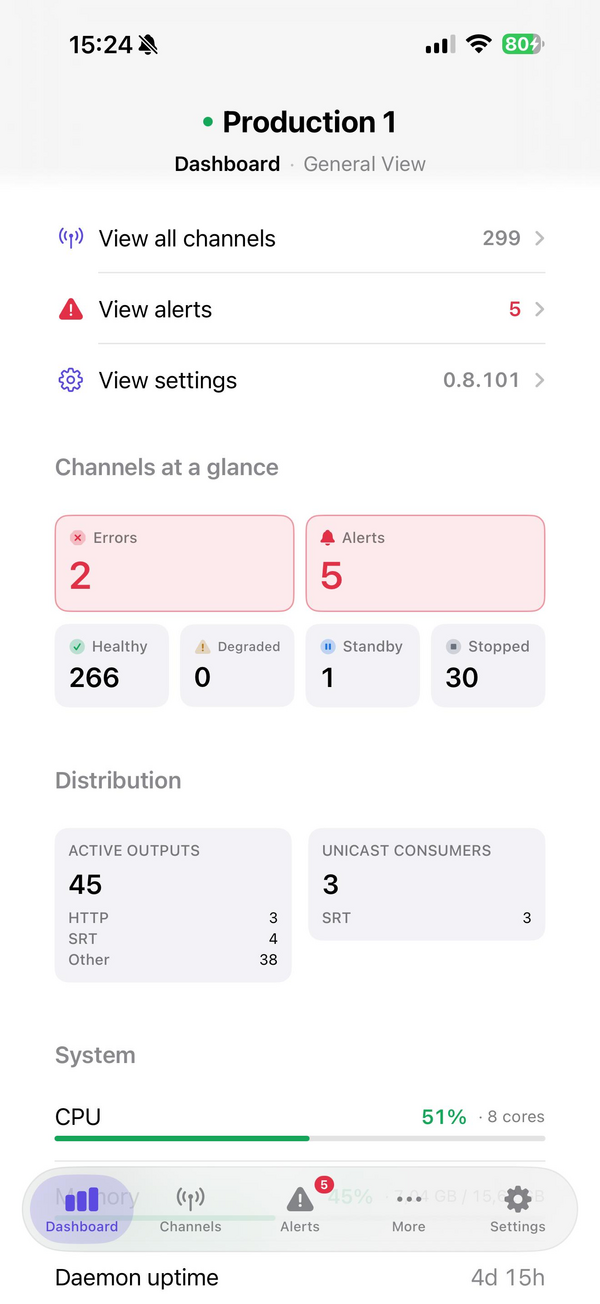
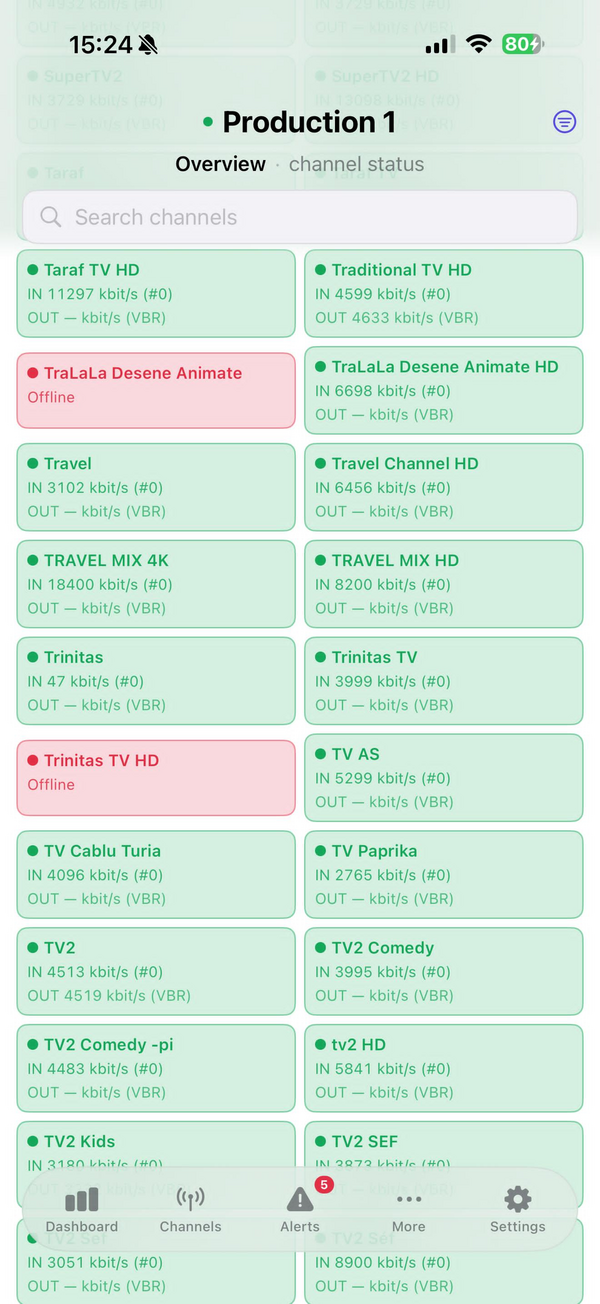
  • Triage every channel’s health, bitrate, and state at a glance.
  • Drill into a channel: signal path, telemetry charts, consumers, and logs.
  • Run the multicast scanner and import discovered streams on the go.
  • Browse the EPG and check XMLTV mappings.
  • Start, stop, and restart channels; adjust configuration live.
  • Secure by design — connects only to your own daemon, over TLS.
Download on theApp Store

Requires iOS/iPadOS 26 or later and a NoSignal daemon reachable over HTTPS. iOS support and setup →

Deployment Model

One Linux binary, with optional integrations kept explicit.

Supported runtime shape

  • Packet parsing, PSI rewriting, CBR pacing, failover logic, the HLS origin, and TS/SRT/UDP delivery all run inside the NoSignal binary — no FFmpeg involved on the hot path.
  • FFmpeg is used for transcoded preview, browser/iOS-compatible HLS renditions, and offline-banner encoding. Raw TS processing and passthrough HLS do not depend on it.
  • ImageMagick is needed only when converting a custom uploaded image into an offline banner.
  • Prometheus is required for the historical telemetry charts. It scrapes NoSignal’s metrics endpoint, and NoSignal queries it back to render charts in the UI.
  • The UI and API bind locally and sit behind nginx for external access and TLS.
  • Durable configuration persists in the embedded redb store; live channel state stays in runtime memory, and Prometheus owns historical telemetry.

Operator-ready from install

  • Automatic failover, operator control, preview, telemetry, scanner, logs, HLS origin, EPG, public status, interface monitoring, and API-key integration.
  • The deployment documentation covers reverse proxy setup, Prometheus integration, and FFmpeg installation.
Contact

See how NoSignal fits your workflow.

Talk to us about your channel count, transport paths, failover policy, and monitoring requirements.

Demos and licensing [email protected]

Tell us how many channels you operate, which transports you use, and how you currently manage failover and stream health.

One license = one instance on one machine. Replicating a license key onto additional machines triggers per-machine fees. By purchasing a NoSignal license you accept the Terms & Conditions — please read the Single-Instance Rule (§4) and the Fees for Unauthorised Use (§9) before placing an order.